
Businesses Under Pressure as Supply Chains Change the Rules of the Game
A business may produce high-quality products but still not be chosen. In today’s supply chains, customers are not only concerned about the products themselves but also want to know how they are made, where the raw materials come from, how quality is controlled, whether delivery can remain stable, and how well environmental requirements are being met.
|
|
|
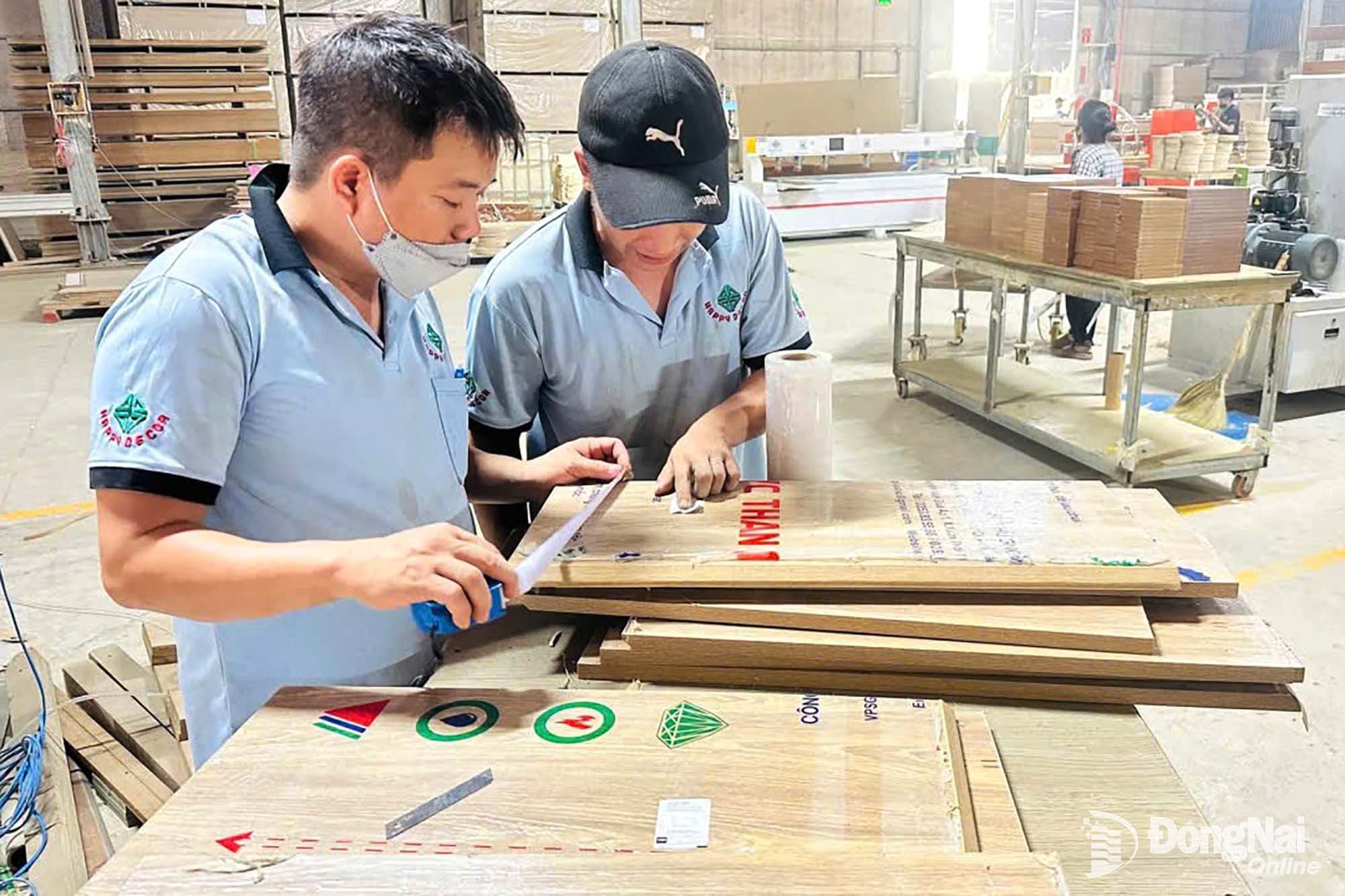
Workers at a wood-processing business in Dong Nai. |
This is becoming an increasingly clear pressure on Vietnamese businesses as global corporations restructure their supply chains.
Rules Are Changing, and Businesses Must Adapt
Following disruptions in raw materials, logistics, and markets, corporations are no longer simply looking for low-cost suppliers. They want multiple sources of supply, reduced dependence on a single market, and, more importantly, suppliers with sufficient capacity to maintain production when disruptions occur.
As a result, today’s orders come with more conditions than before. Businesses must maintain consistent quality rather than simply guarantee a single batch; have data for traceability instead of relying solely on written commitments; and be able to demonstrate the origin of raw materials, energy consumption, emissions, and production processes when requested by customers.
The transition is a pressure, but it is also a test of the capabilities of domestic businesses. Those that proactively embrace change will have opportunities to move deeper into supply chains; those that continue to wait for orders before investing risk missing opportunities that are already emerging within Dong Nai’s industrial ecosystem.
The push toward green production is making this pressure even more apparent. Many international customers have expanded emissions data requirements to include Tier 1 and Tier 2 suppliers within their supply chains. This means that even a business that does not directly export may still have to meet environmental standards imposed by its own customers.
According to Mr. Nguyen Phuong, Chairman of the Dong Nai Association of Wood and Handicrafts and Chairman of the Board of Directors of Vitana One Member Co., Ltd. (Trang Bom Ward), global trade remains subject to considerable uncertainty, along with pressures arising from the trade policies of several major markets. Meanwhile, increasingly complex and multidimensional technical standards related to quality, traceability, and sustainable development continue to affect the industry’s production activities.
This requires the wood industry to accelerate its shift from extensive to intensive development, toward greener and more sustainable production; focus on deeper processing, ensure quality, increase technological content, and enhance added value.
This is also a common challenge for many manufacturing businesses participating in supply chains. According to experts, innovation among small and medium-sized enterprises cannot happen overnight. Investments in machinery, digital management, emissions inventories, and traceability systems all require capital, while customers may not necessarily accept higher prices simply because businesses need to invest to meet new standards.
Therefore, businesses’ innovation and transformation processes need to go hand in hand with government support policies and stronger connections among associations and industry sectors. If each business has to manage the transition on its own, transformation costs will be higher and the ability to meet requirements will likely vary significantly.
Transforming Along the Supply Chain to Meet New Requirements
Dong Nai is home to thousands of foreign-invested enterprises (FDI). This represents a major source of demand for supporting industries and domestic suppliers. However, the gap between being located near an FDI factory and becoming a supplier to that factory remains significant.
This is also why, despite being part of the same industrial ecosystem, domestic businesses do not always fully benefit from the growth of the FDI sector.
The issue concerns both global corporations and domestic businesses. The mindset of waiting for customers to place orders before investing will become increasingly difficult to sustain. New supply chains require suppliers to prepare in advance in terms of technology, quality, data, and human resources.
Dr. Huynh Thanh Dien, a lecturer at Nguyen Tat Thanh University (Ho Chi Minh City), said that the key issue today is how to attract major corporations while simultaneously creating opportunities for domestic businesses to grow and become reliable “links” in supply chains. Only then can substantial progress be achieved in industrial development.
This transformation is taking place not only in manufacturing but throughout the supply chain, particularly in logistics.
At the conference themed “Digital Transformation in Logistics Transactions – Applying Hybrid Models During the Transition Period,” held on August 26 in Ho Chi Minh City, Mr. Nguyen Duy Hung, Standing Vice Chairman of the Dong Nai Logistics Association, said that businesses, particularly those operating at ports, ICDs (inland container depots), and warehouses, have adopted various solutions such as warehouse management systems, electronic ports, electronic delivery orders, e-invoices, cashless payments, and automated customs monitoring.
From manufacturing to logistics, the increasingly clear requirement is that businesses cannot change individual stages in isolation; instead, the capacity of the entire supply chain must be strengthened. A business may invest in technology, but if its data is not connected; a supplier may improve quality, but logistics services fail to meet requirements; or a business may fulfill an order but cannot prove the origin of its products or compliance with environmental standards, its ability to participate more deeply in the supply chain will remain limited.
Changing supply chains are forcing Vietnamese businesses to change as well. It is no longer enough to produce good products; businesses must demonstrate their production capabilities, control systems, and ability to meet customers’ increasingly demanding requirements.
Vương Thế
Source: Báo Đồng Nai